
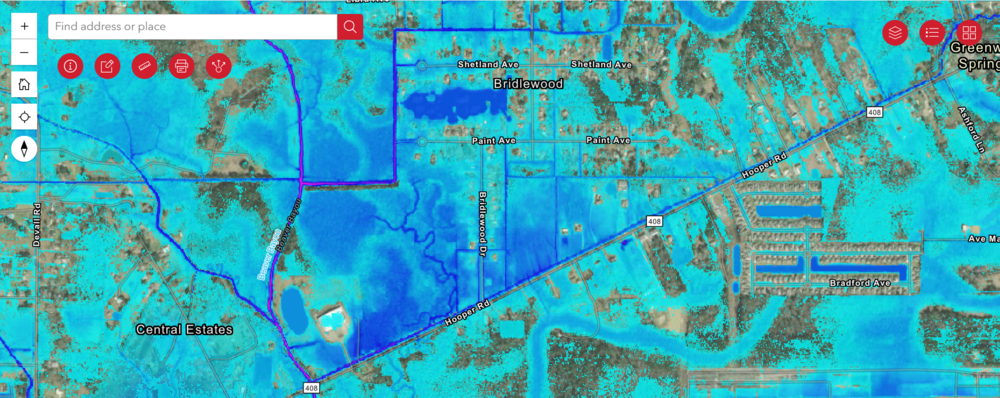
The image illustrates the flooding issues currently affecting neighborhoods north of Hooper Road, including Crystal Place and Bridlewood. The darker blue areas indicate deeper water for reference.
Unfortunately, this is not a problem that can be solved simply by digging ditches or cleaning drainage channels. The primary limitation is the capacity of the two main Beaver Bayou crossings at Hooper Road. We are currently experiencing a rainfall pattern that is placing significant stress on our drainage system, and until we can increase the amount of water flowing through those crossings and construct the planned large detention/storage basins, these types of flooding events will continue to occur during significant rain events.
What we experienced yesterday was approximately a 10- to 15-year storm event in this area. The image shown represents modeled conditions from a 10-year storm and closely mirrors the impacts that residents experienced.
During my visual inspection this morning, I observed debris stacked against culverts that was not there yesterday after crews had already cleaned them. That is part of the challenge during these high-volume rain events. The sheer volume and force of the water picks up debris and moves it downstream until it reaches a choke point, where it slows the flow and worsens flooding.
Our crews are constantly addressing these issues, especially any time we expect more than a normal rain event. The City has spent millions of dollars cleaning drainage canals, ditches, and culverts. Those efforts matter, and they help the system function as efficiently as possible. But without the ability to increase the actual watershed capacity, we are limited in what maintenance alone can accomplish.
City crews are out again this morning addressing drainage choke points, removing debris, and making sure water can move through the system as efficiently as possible. However, these efforts can only provide limited relief. The long-term solution requires approval to improve the Hooper Road crossings and move forward with the planned detention projects. Until those improvements are authorized and completed, similar flooding impacts can be expected during major rainfall events.
Residents can also help by contacting their state and federal representatives and asking them to help fix the permitting and environmental review delays that continue to stall good drainage projects. Maybe if enough of us reach out, we can get some traction and move these critical improvements forward.
If you encounter a public works issue, including drainage concerns, blocked culverts, downed trees, or roadway hazards, please contact the City of Central Public Works Department at (225) 262-5000 so crews can respond appropriately.